Delta Flight Emergency Landing at Cecil Airport: What Happened, Why It Mattersand What Travelers Should Know
On a seemingly routine day, travelers aboard a Delta flight faced a situation that no passenger ever hopes to experience: an unexpected emergency landing at Cecil Airport. While aviation emergencies are rare, they do happen and when they do, they quickly attract public attention.
The recent Delta flight emergency landing at Cecil Airport not only raised questions about what went wrong but also highlighted the safety protocols, airport preparedness and the resilience of passengers and crew in such events. In this detailed guide, we will explore the incident, the response and what every traveler should understand about emergency landings.
Understanding Emergency Landings in Aviation
What Is an Emergency Landing?
An emergency landing occurs when an aircraft must deviate from its original flight plan to land safely due to a technical issue, medical situation, security threat or severe weather.
These landings are divided into categories such as precautionary, forced or ditching (water landing).
Why They Happen
- Mechanical problems like engine failure, hydraulic leaks or electrical malfunctions.
- Medical emergencies involving passengers or crew.
- Environmental hazards such as storms, bird strikes or runway obstructions.
- Security issues ranging from unruly passengers to potential threats.
Delta’s incident at Cecil Airport falls into this broader context: rare but carefully managed situations where safety takes top priority.
Delta Flight Emergency Landing at Cecil Airport: The Incident
Timeline of Events
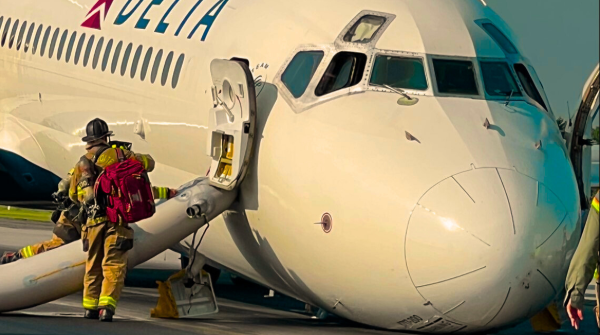
Reports indicate that the Delta aircraft, en route to its destination, experienced an issue that required an immediate diversion. Pilots declared an emergency, following strict FAA procedures and identified Cecil Airport in Jacksonville, Florida, as the safest available landing site.
Why Cecil Airport?
Cecil Airport, a former naval air station, is well-equipped to handle unscheduled landings. With long runways, ample space and limited civilian traffic, it serves as an ideal emergency diversion point for commercial carriers. Its strategic location made it the best choice for the Delta crew.
Passenger and Crew Experience
Witness accounts often describe tense moments followed by relief once the plane lands. Passengers reported calm instructions from the flight attendants, reassurance from the captain and a smooth landing despite the urgency.
How Airlines Handle Emergencies
Pilot Training
Delta pilots undergo rigorous simulator training for scenarios like engine failure, rapid decompression and onboard fires. These drills ensure that when real-life emergencies arise, they act with precision and confidence.
Communication Protocols
Once an issue is identified:
- The flight crew informs Air Traffic Control (ATC).
- ATC coordinates with the nearest suitable airport.
- Emergency services at the chosen airport are placed on standby.
- Passengers are updated with necessary safety instructions.
Post-Landing Checks
After the Delta flight touched down at Cecil Airport, ground crews, mechanics and safety investigators quickly examined the aircraft to determine the root cause of the issue.
Cecil Airport’s Role in Aviation Safety
Background on Cecil Airport
Originally known as Cecil Field Naval Air Station, Cecil Airport has transitioned into a multi-use facility. It supports:
- Military training flights
- Aerospace operations
- Commercial emergency landings
Its long runways and open layout make it ideal for large commercial aircraft during emergencies.
Emergency Response Capabilities
Cecil Airport maintains:
- On-site firefighting and rescue teams
- Coordination with Jacksonville emergency services
- Adequate runway space for wide-body jets
The smooth handling of the Delta incident highlights the airport’s readiness.
What Passengers Should Do During an Emergency Landing
Step-by-Step Passenger Guide
- Stay calm and listen – Crew instructions are designed to maximize safety.
- Fasten seatbelts tightly – Turbulence during descent is common.
- Locate exits – Mentally note the nearest one before landing.
- Brace position – Follow crew demonstration if announced.
- Leave belongings behind – In case of evacuation, speed matters most.
Psychological Impact
Even without injuries, emergency landings can leave passengers shaken. Airlines typically provide support services, counseling information and rebooking assistance after such events.
Delta Air Lines’ Safety Record
Delta is consistently ranked among the world’s safest airlines. Incidents like the Cecil Airport emergency landing are rare exceptions rather than the rule. According to aviation statistics, the chance of being involved in a serious aviation accident is less than 1 in 11 million flights.
Safety Measures Delta Employs
Regular fleet maintenance and inspections
- Advanced aircraft monitoring systems
- Crew fatigue management
- Compliance with FAA and international standards
Media Coverage and Public Reactions
How the Story Spread
News outlets quickly picked up the story of the Delta flight diversion, framing it both as a potential scare and as an example of aviation safety working as designed.
Social Media Buzz
Passengers often post real-time updates, photos and short clips. While this brings transparency, it can also fuel speculation before official investigations conclude.
Semantic Exploration: Related Topics and Insights
- Flight diversion – When planes reroute to a different airport for safety.
- Runway safety – Critical for ensuring smooth emergency landings.
- Pilot decision-making – A key factor in the successful outcome.
- Airline crisis communication – How airlines reassure the public.
- Passenger rights – Refunds, rebooking and compensation.
These related terms help contextualize the Delta Cecil Airport event within broader aviation practices.
FAQs About the Delta Flight Emergency Landing at Cecil Airport
1. What caused the Delta flight to land at Cecil Airport?
The flight experienced an in-flight issue that required immediate diversion. While details are still under review, the decision was precautionary to ensure passenger safety.
2. Were any passengers injured during the emergency landing?
No serious injuries were reported. Emergency landings are conducted with strict safety protocols to minimize risk.
3. Why was Cecil Airport chosen over Jacksonville International Airport?
Cecil Airport offers long runways and less traffic which making it a safer option for emergency landings compared to busier commercial hubs.
4. How often do Delta flights make emergency landings?
Such incidents are extremely rare. Most Delta flights operate without disruption and emergency landings account for a fraction of a percent of total operations.
5. What happens to the plane after an emergency landing?
The aircraft undergoes a thorough inspection by mechanics and aviation authorities before it is cleared to fly again.
6. Do passengers get compensation for emergency landings?
Compensation policies vary. In many cases, airlines provide meal vouchers, hotel stays or rebooking, depending on the delay and circumstances.
7. How safe is it to fly after hearing about such incidents?
Air travel remains the safest mode of transportation. Emergency landings prove that safety systems work effectively when issues arise.
8. Are pilots trained for landings at non-commercial airports like Cecil?
Yes. Pilots are trained to land at alternate airports, including military and regional facilities, in case of emergencies.
9. What should passengers do during a sudden descent?
They should fasten seatbelts, remain seated and follow the crew’s safety instructions. The crew is trained to guide passengers through every step.
10. How can travelers stay informed during such situations?
Most airlines use in-flight announcements, crew communication and mobile notifications. Our tool can also help travelers track real-time flight status and alerts.
Conclusion
The Delta flight emergency landing at Cecil Airport serves as a reminder that while aviation incidents can be unsettling, they are also rare and handled with professionalism. From the quick decision-making of pilots to the readiness of Cecil Airport, the event highlights the robust safety systems in modern aviation.
For passengers, the key takeaway is reassurance: emergencies are met with proven procedures, trained crews and supportive follow-ups. As travelers, staying informed and prepared adds peace of mind.
If you want to track flights, monitor safety updates or prepare for future journeys with confidence, consider using our tool to stay ahead and travel smarter.
- The Best Backpack For Travel With Kids Why We Ditched Family Suitcases
- United Airlines Flight Ua770 Emergency Diversion A Comprehensive Account
- Why Book With Us