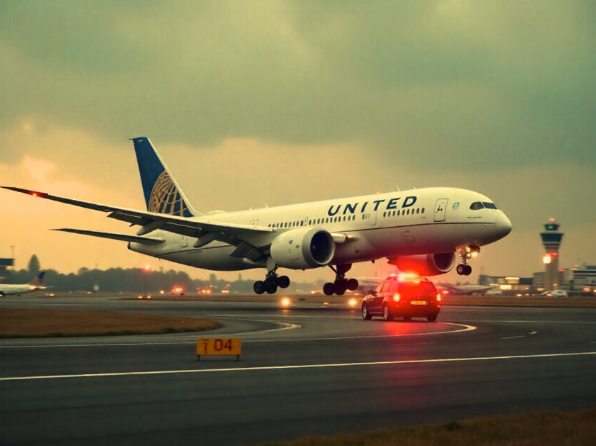
United Airlines Flight UA770 Emergency Diversion: A Comprehensive Account
United Airlines Flight UA770 Emergency Diversion has become a topic of interest among air travel safety watchers, journalists and frequent flyers. When a flight is forced off its scheduled path mid-air, people understandably want to know what happened, why and how passengers were affected.
In the case of UA770, the diversion raised questions about mechanical issues, crew response and whether standard safety protocols were followed. This article delves into every detail available, explaining what we know, what is under investigation and what this event teaches us about airline emergency management and aviation safety culture.
Incident Overview: What Happened with UA770
H2: United Airlines Flight UA770 Emergency Diversion Details & Timeline
Here are the known facts so far about the UA770 emergency diversion:
| Event | Description |
| Origin & Destination | UA770 was scheduled to depart from Barcelona El Prat Airport (Spain) and fly to Chicago O’Hare International Airport (USA). Travel and Tour World+3BizzBuzz+3Travel and Tour World+3 |
| Aircraft & Capacity | The flight was on a Boeing 787-9 Dreamliner, carrying approximately 257 passengers and 12 crew members. BizzBuzz+2Travel and Tour World+2 |
| Mid-flight Anomaly | Roughly 90 minutes after takeoff, at cruising altitude over the Atlantic, the crew detected a technical issue, reportedly related to cabin pressurization. BizzBuzz+1 |
| Decision to Divert | After evaluation, the pilot declared an emergency and rerouted the flight to a closer airport London Heathrow International Airport to ensure safety. BizzBuzz+1 |
| Landing & Aftermath | The aircraft landed safely with no injuries. Passengers were assisted with accommodations, rebooking and meals as needed. BizzBuzz+1 |
Causes & Contributing Factors
H3: What Triggered the Emergency Diversion?
While investigations are still underway, preliminary indicators point to:
- Cabin pressurization fault: A problem in maintaining safe cabin pressure which can lead to discomfort, disorientation and even hypoxia if not addressed. BizzBuzz+1
- Technical or mechanical irregularities: The systems aboard modern aircraft constantly monitor conditions; anomalies often trigger alarms, forcing pilots to act. BizzBuzz+1
H3: Crew Response & Decision-Making
What stands out in the UA770 case is how swiftly and methodically the crew reacted:
1.Detection: The crew noticed the irregular readings from cabin pressure instruments.
2.Declaration: A declaration of emergency was made to alert air traffic control.
3.Diversion: The decision was made to divert to a safer landing location in this case, Heathrow.
4.Communication: Crew kept passengers informed, calm and safe.
5.Coordination: Coordination with ground teams and emergency services was executed as per standard emergency protocols.
These steps reflect well-established aviation safety procedures which emphasize preserving life over maintaining schedules
Passenger Experience & Impact
H2: How Passengers Were Affected
Passengers on UA770 experienced a mix of emotions: anxiety, surprise, relief. Some of the impacts:
- Uncertainty and worry, especially when technical issues are involved.
- Calm from communication: Many passengers reported that flight attendants and crew communicated clearly which helped reduce stress. BizzBuzz+1
- Delay & Rebooking: Once on the ground, arrangements were made for lodging, meals and transit to final destinations. BizzBuzz+1
- No injuries reported: Fortunately, despite the emergency diversion, everyone landed safely with no harm. BizzBuzz+2Travel and Tour World+2
H3: Disruption & Compensation
As with most diversions:
- Flights following UA770 for many passengers were delayed or rebooked.
- United Airlines likely provided mitigation in terms of customer service: meal vouchers, hotel stays, connecting flights. (This is typical and there are reports consistent with this in UA770’s case.) BizzBuzz+1
Emotional stress and uncertainty are intangible but real. Many travelers expressed gratitude for the professionalism of the crew.
Safety Protocols & Airline Preparedness
H2: What Airlines Do in Emergencies
An emergency diversion like that of UA770 is supported by multiple layers of preparation and regulation.
Key Safety Measures:
- Aircraft Monitoring Systems: Sensors for pressurization, hydraulics, engines, etc., constantly check their own states and alert if anomalies arise.
- Crew Training: Pilots and cabin crew practice emergency scenarios (pressurization loss, engine failure, medical emergencies) repeatedly in simulators.
- Regulatory Oversight: Agencies like the FAA (USA), EASA (Europe), etc., set mandatory minimum safety standards. Airlines must comply.
- Emergency response planning: Ground staff, air traffic control, airport emergency services coordinate to receive diverted flights.
H3: Why UA770’s Diversion Was Standard Procedure
- The decision to divert is always about risk assessment. Even if the fault is minor, its potential to escalate prompts action.
- Proximity to airports capable of dealing with emergencies (medical, mechanical) influences which alternate destination is chosen. Heathrow, with its advanced infrastructure, was a logical choice.
- Communication channels between cockpit, airline operations, air traffic control and ground services are well-integrated.
Comparative Cases & Context
Putting UA770’s diversion in context helps understand how rare or common these events are and how they are handled.
H3: Similar Incidents
| Flight | Issue | Diversion Point | Outcome |
| UA770 (Barcelona → Chicago) | Cabin pressurization anomaly / technical irregularity | Diverted to Heathrow | Safe landing, no injuries BizzBuzz+1 |
| Other UA flights in 2025 | Mechanical / weather / system failures | Various airports | Typically, handled with safety, often with delay, few injuries Travel and Tour World+2Travel and Tour World+2 |
H3: How Frequent Are Emergency Diversions?
- Diversions are rare relative to the number of flights.
- Many are precautionary rather than reactionary.
- Airlines factor in costs, passenger inconvenience and logistics but safety always takes priority.
Investigation & After-Action
H2: What Happens After the Diversion
After UA770 landed safely, standard investigative and remedial procedures began.
- Inspection of the aircraft: Maintenance crews check systems associated with the cause (e.g., pressurization system).
- Data analysis: Cockpit voice recorders, flight data recorders, sensor logs and any warnings or irregular system readings are downloaded and reviewed.
- Regulatory review: Agencies such as EASA (if over Europe) or FAA (if under US jurisdiction) may open formal investigations.
- Crew debrief: Pilots, cabin crew and operations teams discuss what happened, evaluate actions and suggest improvements.
- Passenger feedback: Airlines often collect statements from passengers to assess clarity of communication, comfort and emotional impact.
H3: Expected Outcomes
- Recommendations for maintenance checks or design improvements in pressurization hardware or sensors.
- Possible updating of operational protocols if anything was identified that could be better handled.
- Pushing further improvements in emergency training.
Communication & Public Reassurance
H2: How United Airlines & Authorities Addressed the Public
Transparency is crucial in such emergencies. In UA770’s case:
- Official statements confirming that UA770 declared an emergency and safely diverted. Travel and Tour World+2BizzBuzz+2
- Reassurances that no passengers or crew were harmed. BizzBuzz+1
- Updates on rebooking, compensation and delays for affected passengers.
- Commitment to investigate and publish findings where possible
Key Takeaways & Learnings
H2: What UA770 Tells Us About Airline Safety
- Safety over schedule: Even if a flight is long haul or high-traffic, airlines will reroute if danger is even minimally perceived.
- Importance of instrumentation & monitoring: Early detection of issues is often what prevents escalation.
- Crew professionalism makes a difference: Calm, clear communication, procedural adherence and training pay off.
- Passenger experience matters: How the airline handles the aftermath accommodation, communication, etc. shapes long-term trust.
H3: What Could Be Improved
- Faster disclosure of investigation findings (while respecting regulatory and technical constraints).
- Greater real-time updates for passengers during diversion (apps, alert systems).
- Psychological support or better protocols for passenger reassurance during unexpected emergencies.
FAQs
Here are some frequently asked questions about United Airlines Flight UA770 Emergency Diversion, along with detailed answers.
1. What does “emergency diversion” mean in aviation?
An emergency diversion occurs when an in-flight aircraft cannot safely continue to its original destination, due to safety, mechanical, medical or environmental reasons. The crew then alters the flight path to land at an alternate airport prepared for an emergency touchdown. It is a safety protocol, not a failure.
2. Why did UA770 declare an emergency?
For UA770, preliminary reports suggest a cabin pressurization anomaly. That means the system that regulates air pressure inside the cabin wasn’t functioning properly. Because comfortable and safe cabin pressure is vital for breathing, altitude effects, etc. any irregularity triggers a conservative safety response. BizzBuzz+1
3. How is an alternate airport chosen?
Altitude, geography, available airport facilities, distanceand whether the alternate has emergency services (fire, medical, etc.) all matter. For UA770, Heathrow International was selected due to its capability, accessibility and readiness to handle emergencies. BizzBuzz+1
4. Was anyone hurt on UA770?
No. All passengers and crew landed safely, with no injuries reported. BizzBuzz+2Travel and Tour World+2
5. How are passengers affected when a flight is diverted?
They often experience delay, stress, disruption in connecting flights. Airlines usually provide meals, accommodation and assist in rebooking to final destinations. The goal is to minimize inconvenience.
6. Do emergency diversions cost the airline?
Yes. Costs may include fuel for the detour, landing fees at the alternate airport, accommodation and meal vouchers for passengers, crew time and aircraft downtime. However, these are considered part of operating safely.
7. How often do flights get diverted?
Relatively rarely. Given the total number of commercial flights per year, diversions happen in a tiny fraction. Many are precautionary. Airlines and aviation regulators track and study them to reduce frequency further.
8. Is it dangerous to fly after a diversion for technical reasons?
Typically, no provided the aircraft has been inspected and cleared. Aircraft are grounded, inspected and repaired where needed. Safety standards prevent flying with unresolved mechanical anomalies.
9. Will the investigation results be made public?
Often, yes, though the timeline can vary. Regulatory agencies or the airline may release a report or summary. Sometimes, technical or proprietary concerns can delay full public disclosure.
10. What are the lessons for passengers from UA770’s incident?
Being aware helps: paying attention to crew announcements, knowing what to do in emergencies (fasten seatbelt, stay calm). Also, expect that diversions while rare, are in the safety toolkit Airlines possess. UA770 is a reminder that safety always comes first even at the cost of travel plans.
Using Our Tool for Live Tracking & Analysis
If you want to track flight status, inspect technical reports or compare UA770’s diversion with similar aviation incidents, you can use our tool. It allows you to pull up flight-tracker data, see diversion history, inspect safety incident logs and assess how airline responses measure up in emergency scenarios.
Conclusion
United Airlines Flight UA770’s emergency diversion underlines the inherent complexity and risks of long-haul commercial air travel and yet, also reaffirms how robust and well-practiced safety systems really are. From detecting a technical issue, to declaring an emergency, to landing safely at Heathrow, every step showed that protocol, training and clear communication matter.
For passengers, it’s a story of reassurance: even in unexpected turbulence, there are systems and people ready to preserve lives. For the industry, UA770 offers lessons to refine procedures and transparency. If you ever fly UA770 or any airline again, remember: it’s not the events in the sky that define the safety of flight but how those events are handled.
If you found this article helpful, share it with others concerned about air travel safety. And if you had like, I can keep you updated with investigation findings or similar cases just let me know.
- Coffee Flights The Ultimate Guide To Tasting Exploring And Enjoying
- Contact Us
- Credit Cards That Help Cut Flight Prices
- Dedicated Corporate Travel Management A Complete Guide To Smarter Business Travel Management